
Benefits of laparoscopy
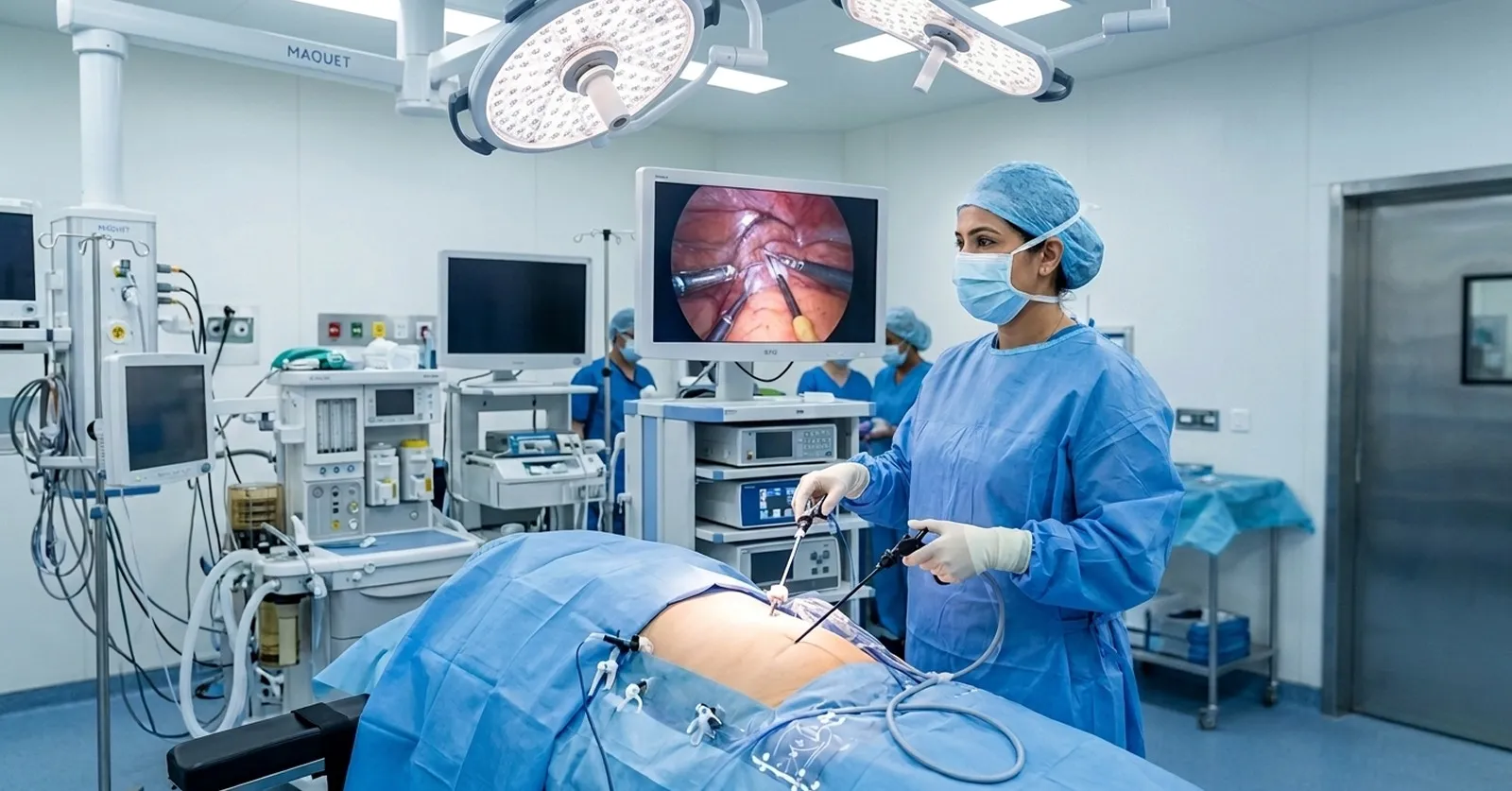
Many people believe that all surgeries mean big incision, long scars and weeks of painful recovery. If your loved ones have been advised for surgery its natural TO FEEL anxious and worried. All of these has changed in modern day surgery especially after the implementation of laparoscopic or Key hole surgery which uses small cut, tiny camera and advanced tools to treat many conditions with ultimate aim of faster recover of patients.
With remarkable precision and better visibility scope of laparoscopic surgery has been expanded in such manner that even complicated surgeries with minimal complications has become a reality
Benefits of laparoscopic surgery
It is important to know that surgery is a form of trauma as we deliberately make an opening in our body which results in initiation of inflammatory reactions which has a dual purpose of enduring insults caused by surgery and determines the extent or pace of recovery. These reactions are the differentiating factor between open and laparoscopic surgery as traditional surgery involves bigger cuts/opening when compared to laparoscopic surgery which involves only smaller opening, therefore reactions induced will be lesser in severity when compared to open surgery. In short benefits of laparoscopic surgery are
- Faster recovery time
- Reduced pain
- Smaller scars
- Low risk of infection
- Shorter hospital stay.
Common myths about laparoscopic surgery.
Even though several studies in the past has proved the safety and efficacy of laparoscopic surgery, there are still many myths/misconceptions surrounding laparoscopic surgery. In this blog we have tried to talk about some of the common myths surrounding laparoscopic surgery and facts which have disapproved these myths with the ultimate aim of providing clarity to the patients and their kin while making informed decisions regarding laparoscopic surgery.
Myth 1: Is laparoscopic surgery only suitable for minor procedures?
Fact: With remarkable precision and better visibility, laparoscopic surgery is not only useful for minor surgeries but also used in complicated surgeries
| Procedure | Description |
| Laparoscopic Appendectomy | Removal of the appendix |
| Hernia repair | Repair of a weakened abdominal wall |
| Laparoscopic hysterectomy | Removal of the uterus |
| Laparoscopic cholecystectomy | Removal of the gallbladder |
Myth 2: Is open surgery safer than laparoscopic surgery?
Fact: Laparoscopic surgery is a minimal invasive surgery which uses small incisions and as a result of this the inflammatory reactions initiated will be lesser in severity which helps in faster recovery. The advantages of it are as follows:
- Shorter stay
- Lesser pain
- Return to normal day to day activities in a short period of time
Therefore, it is apt to say Laparoscopic surgery is just as safe, and in many cases safer, than open surgery. It usually leads to less blood loss, lower infection risk, and quicker recovery.
Myth 3: “Laparoscopic surgery is too new and not fully safe.”
Fact: Laparoscopic surgery has been practiced safely worldwide since the 1970s, with continuous advances in technology and training making it safer than ever. In addition, advancements in training has made surgeons capable of handling many complicated surgeries very efficiently.
Myth 4: Will I be left with big scars after laparoscopic surgery?
Fact: Compared to traditional surgery, laparoscopic surgery uses 3 to 5 smaller incisions varying between 0.5cm to 1cm in size. Hence most of these scars are smaller in appearance and some of them placed over natural folds of the skin which later becomes barely visible to naked eye.
Myth 5: Is laparoscopic surgery unsafe for older patients?
Fact: Age cannot be considered as a limiting factor for laparoscopic surgery. Thorough evaluation of individuals’ health status is essential as it determines whether patient is suitable candidate for either open or laparoscopic surgery. Laparoscopy is generally suitable for elderly due to following factors
- Reduced Anaesthesia time
- Lesser post-operative pain
- Early mobilisation which gives reduces development of bedsore or pneumonia
Myth 6: “Children are not suitable candidates for laparoscopic surgery.”
Fact: Laparoscopic surgery is not only safe for children, but in many cases it is actually the preferred option. Paediatric surgeons across the world routinely perform laparoscopic procedures for appendicitis, hernia, gallstones, and other conditions in children. Because the cuts are smaller, children recover faster, have less pain, and return to school and play much sooner compared to open surgery. Of course, the decision always depends on the child’s age, health, and the specific condition, but with proper expertise, laparoscopy is very safe in children
Risks of laparoscopic surgery
It is important to remember that each treatment whether its medical or surgical in nature has its own set of complications and laparoscopy is no exception to this. Some of the risks associated with are
- Potential for bleeding
- Port site infections
- Injury to the surrounding organs
- Difficult operative field
All this factors can increase the duration of surgery which in a way can hamper post-operative period. Keeping that in mind in order to reduce the duration of surgery it is understandable to convert laparoscopic surgery to open surgery during the same procedure.
Recovery Tips After Laparoscopic Surgery
Start moving early – Gentle walking soon after surgery helps improve circulation and speeds up healing.
Eat light, balanced meals – Begin with soft foods, then gradually return to your normal diet. Avoid heavy, oily food in the first few days.
Care for your wounds – Keep incision sites clean and dry. Follow your doctor’s instructions for dressing changes.
Avoid heavy lifting – Don’t lift weights or strain your abdomen for at least 3–4 weeks, unless your surgeon clears you.
Listen to your body – Some tiredness, mild discomfort, or bloating is normal. Rest when you need to.
Watch for warning signs – Contact your doctor if you develop fever, severe pain, persistent vomiting, or redness/swelling around the incision
Conclusion
Laparoscopic surgery a form of minimal invasive surgery is definitely beneficial for a large set of patients. It is important as an individual or community to understand the facts about lap surgery (pros and cons of laparoscopic surgery) which helps in making better informed decisions. The decision to undertake which course of treatment -Lap or open surgery should be individualistic which requires evaluation and consultation with your doctor.
“Laparoscopic surgery has changed the way we heal less pain, quicker recovery, and lasting results. If you are worried about surgery, don’t let myths hold you back. Talk to us at Sayee Velan Clinic, where we are committed to safe, advanced, and compassionate surgical care for you and your family.”