
What Happens During An Upper GI Endoscopy? (A Patient’s Guide)
Getting told you need an endoscopy can feel unsettling. For most people, the procedure itself sounds worse than it actually is. A flexible tube going down the throat, it’s the kind of thing that makes people anxious before they’ve even asked a single question about it.
But a lot of that anxiety comes from not knowing what to expect. And that’s exactly what this guide is for.
What Is an Upper GI Endoscopy?
An upper GI endoscopy also called an upper gastrointestinal endoscopy or OGD (oesophago-gastro-duodenoscopy), is a procedure that allows a doctor to look directly at the lining of the oesophagus, stomach, and the first part of the small intestine, called the duodenum.
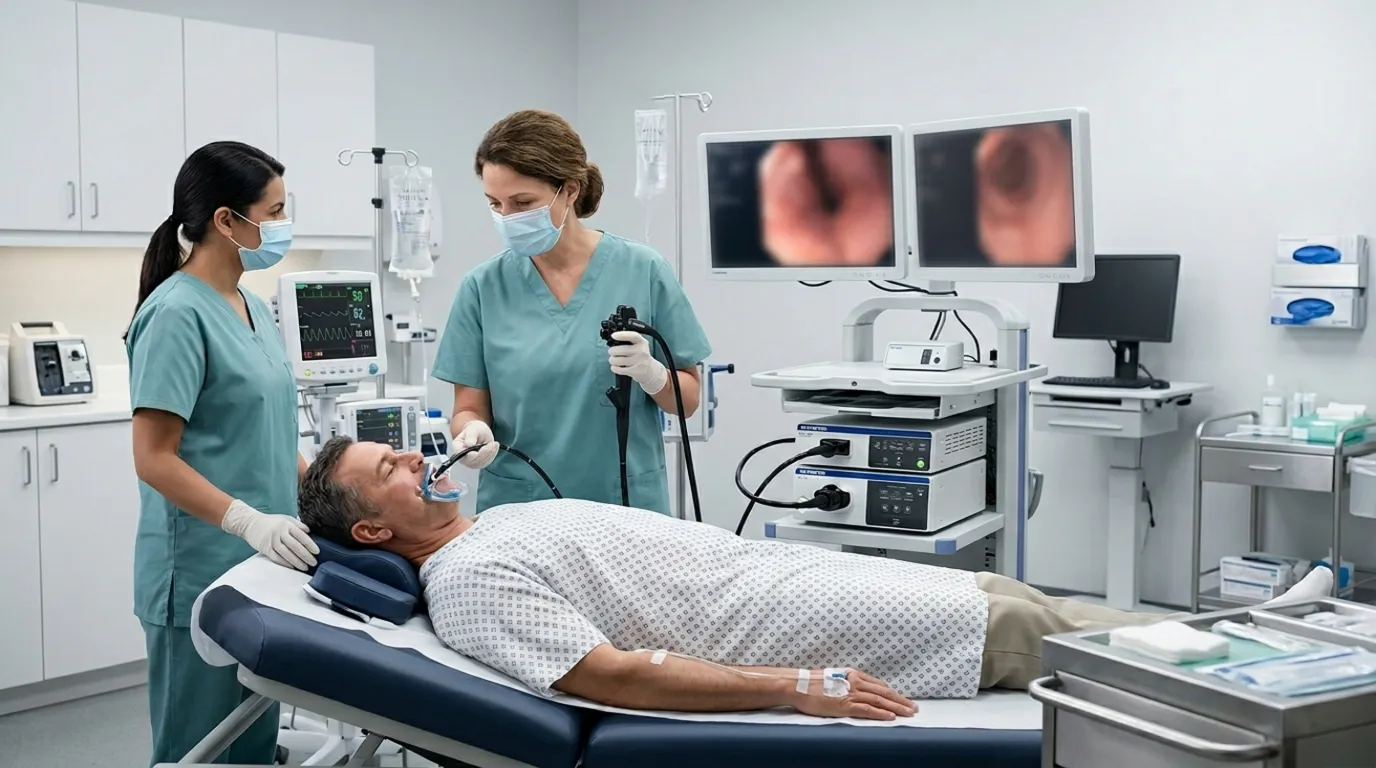
It’s done using an endoscope a thin, flexible tube with a small camera and light at the tip. The images are displayed on a monitor in real time, giving the doctor a clear, close-up view of what’s happening inside.
It sounds complex. In practice, it’s one of the most commonly performed diagnostic procedures, and for good reason, it gives information that no scan or blood test can.
Why Is It Recommended?
Doctors recommend an upper GI endoscopy for a range of reasons:
- Persistent acid reflux or heartburn that isn’t responding to medication
- Difficulty swallowing or a sensation of food getting stuck
- Unexplained abdominal pain or bloating
- Nausea or vomiting that keeps coming back
- Bleeding from the upper digestive tract
- Investigating ulcers, inflammation, or suspicious growths
- Checking for conditions like Barrett’s oesophagus or gastritis
Sometimes it’s purely diagnostic, looking for answers. Other times, it’s also therapeutic, meaning a problem can be treated during the same procedure.
Before the Procedure What You Need to Do
Preparation is straightforward, but it matters.
You’ll be asked to fast for at least six to eight hours before the procedure, no food, no water. This ensures the stomach is empty, which gives the doctor a clear view and reduces the risk of complications during the procedure.
Let your doctor know beforehand about any medications you’re on, especially blood thinners, diabetes medication, or supplements. Some may need to be paused temporarily.
You’ll also need someone to come with you. Even if you feel fine after, the sedation used during the procedure affects your alertness for a few hours. Driving yourself home isn’t advisable.
What Actually Happens on the Day
When you arrive, the team will go through a quick check, confirming your medical history, allergies, and what the procedure involves. This is a good time to ask any last-minute questions.
You’ll be given a sedative through an IV. It doesn’t put you fully to sleep like general anaesthesia, most patients drift into a light, drowsy state and have little to no memory of the procedure itself. A local anaesthetic spray is also applied to the back of the throat to reduce the gag reflex.
You’ll be positioned on your left side. The endoscope is gently guided in through the mouth, down the oesophagus, into the stomach, and then into the duodenum. Air is introduced to gently expand the area so the doctor gets a better view.
The whole thing usually takes between fifteen and thirty minutes.
During the procedure, if something needs closer attention, the doctor can take a small tissue sample, a biopsy, using tiny instruments passed through the endoscope. It sounds alarming but causes no pain.
After the Procedure What to Expect
Most people feel a bit groggy for an hour or two after, which is normal. There may be mild bloating or a feeling of fullness from the air used during the procedure, that passes on its own fairly quickly.
A slight soreness in the throat is common for a day or so. Nothing severe, usually just a mild scratchy feeling.
You’ll be able to eat and drink again once the throat numbness from the local anaesthetic wears off, usually within an hour.
Your doctor will discuss initial findings with you before you leave, though biopsy results, if taken typically take a few days to come back.
Are There Any Risks?
An upper GI endoscopy is considered a very safe procedure. Serious complications are rare. That said, like any medical procedure, there are small risks worth knowing about:
- Mild bleeding, especially if a biopsy was taken
- A reaction to the sedation
- In very rare cases, a small perforation in the digestive tract lining
These are uncommon. Your medical team will go through the risks with you beforehand and monitor you closely throughout.
Signs to Watch For After You Get Home
Most people go home and feel fine by the evening. But contact your doctor if you notice:
- Severe or worsening abdominal pain
- Difficulty swallowing that gets worse rather than better
- Fever or chills
- Vomiting blood or passing dark, tarry stools
These are not typical after an endoscopy and should be reported promptly.
Final Thoughts
An upper GI endoscopy is one of those procedures that tends to sound a lot more daunting than it actually is. For most patients, it’s over quickly, causes minimal discomfort, and provides answers that genuinely guide treatment decisions.
If you’ve been advised to get one and you’re feeling uncertain, that’s completely understandable. The best thing to do is go in informed and ask your doctor every question you have.
Our team guides patients through the entire process, from understanding why the procedure is recommended to what comes next after the results. If you’ve been experiencing persistent digestive symptoms or have been referred for an endoscopy, we’re here to help you through it.