
Sports Hernia vs. Inguinal Hernia: What Active Adults in Chennai Should Know
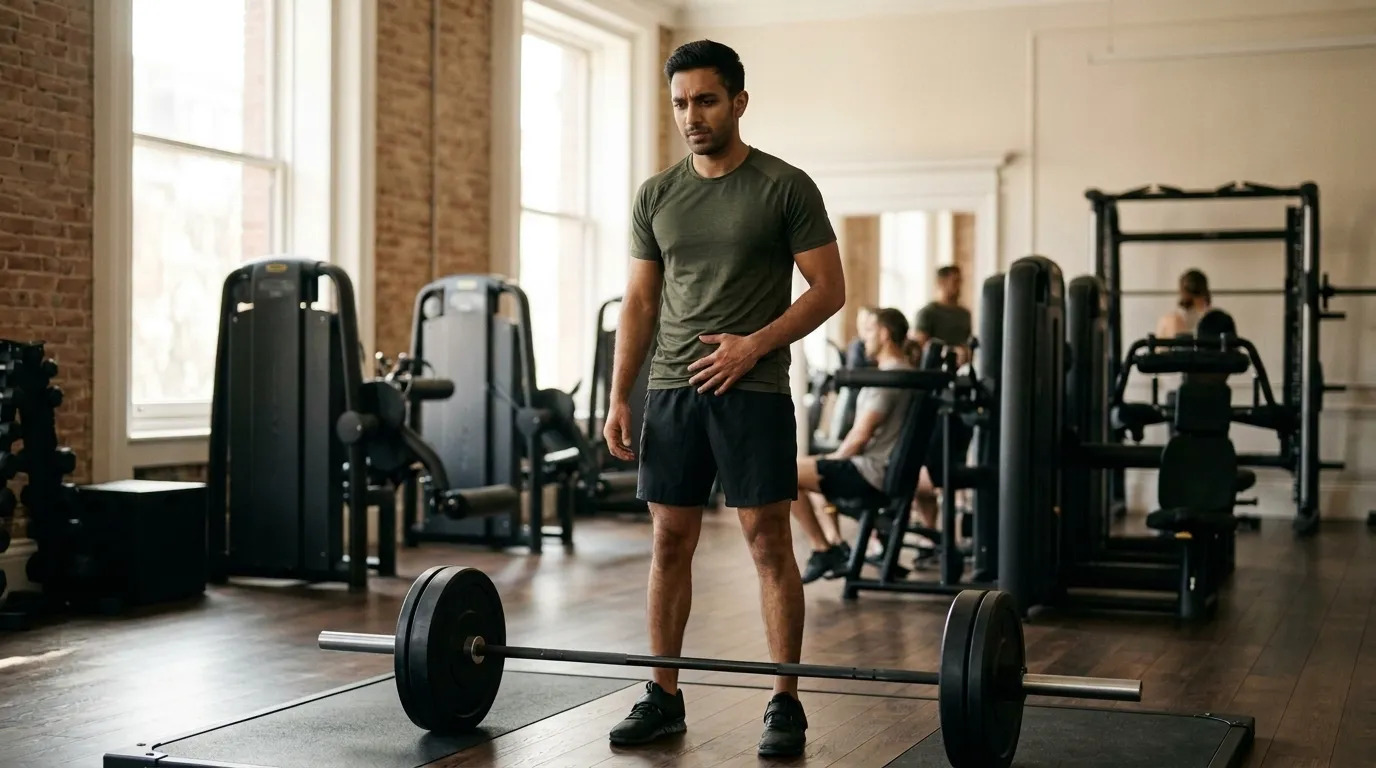
Groin pain in active adults is one of those things that gets blamed on everything except the right cause. A pulled muscle from that morning run at Besant Nagar beach. A strain from the weekend cricket match. Something that’ll sort itself out with rest and a pain relief spray.
Sometimes that’s exactly what it is. But sometimes the pain keeps coming back. It eases with rest and returns the moment activity resumes. Or there’s a dull ache that’s been quietly building for weeks, present even when sitting still. And at some point, the usual explanations stop fitting.
Two conditions that frequently get confused in active adults, and frequently get misdiagnosed as simple muscle strains are sports hernias and inguinal hernias. They both cause groin pain. They both affect people who are physically active. And they’re genuinely different conditions that need different approaches.
Here’s what Chennai’s active adults need to know about both.
First Where Exactly Is the Groin?
The groin is the area where the lower abdomen meets the upper thigh, the crease on either side where the leg attaches to the trunk. It’s a region crossed by several important structures: muscles, tendons, ligaments, nerves, and the inguinal canal, a passage through the abdominal wall through which the spermatic cord passes in men and the round ligament in women.
This area takes significant mechanical load during running, kicking, twisting, and sudden changes of direction. It’s also a structurally complex zone, which is part of why groin pain can be hard to pin down without proper assessment.
What Is an Inguinal Hernia?
An inguinal hernia is a structural defect, a weakness or gap in the abdominal wall in the inguinal region through which abdominal tissue pushes through. That tissue is usually a portion of the peritoneum, the lining of the abdominal cavity and often contains a loop of intestine or fatty tissue.
The result is a hernia sac pushing through the inguinal canal, sometimes visible as a bulge in the groin or upper scrotum in men. It’s one of the most common surgical conditions, and while it affects both men and women, it’s significantly more common in men due to anatomical differences in the inguinal canal.
How Does It Feel?
The hallmark of an inguinal hernia is a visible or palpable bulge in the groin. This is what separates it most clearly from other causes of groin pain. The bulge typically:
- Appears when standing, straining, coughing, or lifting
- Reduces or disappears when lying down
- May or may not be painful, some inguinal hernias cause significant discomfort, others cause almost none
When pain is present, it tends to be:
- A dull ache or heaviness in the groin, particularly after physical activity or long periods of standing
- A sharp pain with coughing, sneezing, or sudden exertion
- Discomfort that worsens through the day and eases with rest
For active adults, the pain from an inguinal hernia often becomes more noticeable during exercise particularly activities that increase intra-abdominal pressure like weightlifting, running, or core exercises.
What Is a Sports Hernia?
Despite the name, a sports hernia isn’t actually a hernia in the traditional sense. There’s no hole in the abdominal wall. No tissue is pushing through anywhere. The name is arguably misleading, which is part of why the condition causes so much confusion.
The more accurate medical term is athletic pubalgia. It refers to a tear or strain of the soft tissue muscles, tendons, or their attachments, in the lower abdominal and groin region, particularly around the pubic bone. The structures most commonly involved are the muscles and tendons that attach to the pubic symphysis, particularly the oblique muscles and the adductors.
It develops from repeated high-intensity movements that put shear force across the pelvis, sprinting, sudden direction changes, kicking, twisting. It’s particularly common in footballers, cricketers, hockey players, runners, and martial artists. But it can affect anyone whose training or occupation involves these movement patterns.
How Does It Feel?
The key difference from a true hernia is the absence of a visible bulge. There’s nothing to feel or see externally. The pain is entirely from the soft tissue injury.
Typical features:
- Deep groin pain, often described as a dull ache during activity that can become sharp with specific movements
- Pain that’s worse with sprinting, kicking, twisting, or sudden acceleration
- Eases significantly with rest, often feels fine the morning after a training session but returns once activity resumes
- Sometimes radiates into the inner thigh, lower abdomen, or testicle in men
- Bilateral involvement both sides affected is possible, though one side is usually more symptomatic
- Sit-ups, coughing, or sneezing may aggravate it
- No visible bulge, this is the defining clinical difference
The frustrating pattern for athletes is that it feels manageable enough to train through initially, gets progressively worse over weeks, and eventually makes high-intensity activity impossible.
How Are They Different? A Side-by-Side Look
| Inguinal Hernia | Sports Hernia (Athletic Pubalgia) | |
|---|---|---|
| What it is | Structural defect tissue pushing through abdominal wall | Soft tissue tear muscle or tendon injury |
| Visible bulge | Usually yes | No |
| Pain with activity | Yes, worsens with exertion | Yes, particularly with high-intensity movement |
| Pain at rest | Often minimal | Usually eases significantly with rest |
| Who gets it | Anyone, more common in men | Predominantly active adults and athletes |
| Diagnosis | Clinical examination, ultrasound | Clinical assessment, MRI |
| Treatment | Surgical repair | Usually conservative first, surgery if needed |
Why Chennai’s Active Population Is Particularly at Risk
Chennai’s climate and lifestyle create specific patterns of physical activity worth noting. Year-round heat means outdoor activity tends to cluster in early mornings and evenings often with insufficient warm-up time. Weekend warriors who are largely sedentary through the week and then play intense cricket or football on weekends are particularly susceptible to the kind of repetitive groin strain that leads to athletic pubalgia.
Gym culture has grown significantly across Chennai, particularly in areas like Velachery, Adyar, Anna Nagar, and OMR and heavy compound lifting without adequate core conditioning puts sustained load on the inguinal region.
Marathon running has become popular along the ECR and at events like the Chennai Marathon, and distance runners aren’t immune, hip flexor and adductor strain from prolonged running loads can contribute to athletic pubalgia over time.
And for the large number of men doing manual physical work, construction, loading, lifting, the risk of inguinal hernia from chronic intra-abdominal pressure is real and consistent.
How Is Each One Diagnosed?
Inguinal Hernia
Diagnosis starts with a clinical examination. A surgeon examines the groin, asking the patient to stand and cough, to assess for a bulge and feel the inguinal canal. In many cases, the hernia is palpable and the diagnosis is made clinically.
An ultrasound is often arranged to confirm the findings, assess the size and contents of the hernia, and check the opposite side. In cases where the hernia is small and not easily palpable, ultrasound can be the key to identifying it.
Sports Hernia
This one is harder to pin down, which is why it gets missed or delayed. There’s nothing to feel externally. The diagnosis relies on a detailed history, the type of activity, the onset pattern, how pain behaves combined with physical examination findings that assess specific muscle and tendon attachments around the pubic symphysis.
An MRI of the pelvis and groin is the most useful investigation. It can identify tears or strain at specific attachment points, fluid around the pubic symphysis (pubic bone stress), and associated adductor or rectus abdominis involvement. It also helps rule out other causes of groin pain stress fractures, hip joint pathology, labral tears, that can produce similar symptoms.
Treatment Where the Two Conditions Diverge
Treating an Inguinal Hernia
An inguinal hernia doesn’t heal on its own. The defect in the abdominal wall doesn’t close. Management options are observation for small, asymptomatic hernias in selected patients, or surgical repair.
For active adults, particularly those whose symptoms are affecting training, sport, or work surgery is almost always the right call rather than watching and waiting. The hernia will not improve, and continued high-intensity activity with an unrepaired hernia increases the risk of complications.
Laparoscopic inguinal hernia repair – a TEP (totally extraperitoneal) or TAPP (transabdominal preperitoneal) approach is the preferred technique for active adults. The hernia is repaired with mesh placed through small keyhole incisions, without entering the abdominal cavity in the TEP approach. Benefits:
- Smaller incisions and minimal scarring
- Less post-operative pain
- Faster return to physical activity most athletes return to full training within three to six weeks
- Lower rate of chronic groin pain compared to open repair
Open repair remains an option and is appropriate in certain situations, but laparoscopic repair’s faster recovery makes it particularly well-suited to active patients.
Treating a Sports Hernia
Unlike a true hernia, athletic pubalgia is approached conservatively first in most cases.
Rest and activity modification – the first step is reducing or stopping the high-intensity activities that provoke pain. For competitive athletes this is difficult, but attempting to train through it typically prolongs recovery.
Physiotherapy – a structured rehabilitation programme targeting the core muscles, hip flexors, and adductors. Strengthening the muscles around the pubic symphysis reduces the shear forces that caused the injury and allows the torn tissue to heal. This is the cornerstone of non-surgical management and works well for a significant proportion of patients.
Anti-inflammatory treatment – NSAIDs and in some cases a corticosteroid injection into the affected area can reduce inflammation and allow physiotherapy to progress.
Return to sport programme – a carefully graduated return to activity, progressing from light movement through to sport-specific drills before returning to full training. Returning too quickly is one of the most common reasons for re-injury.
Surgery – when conservative management over three to six months hasn’t provided adequate improvement, surgical repair is considered. The procedure involves reinforcing the posterior wall of the inguinal canal and repairing the torn musculotendinous attachments. In experienced hands, outcomes are good, most athletes return to full sport within two to three months of surgery.
Can Both Conditions Exist Together?
Yes, and this is worth knowing. Some patients have both a true inguinal hernia and athletic pubalgia at the same time, or develop one condition while being treated for the other.
The distinction matters because treating only one when both are present means ongoing symptoms after recovery from the surgical repair. A thorough pre-operative assessment in active patients with groin pain clinical examination plus imaging, is important for exactly this reason.
When Should You Get It Assessed?
Groin pain in an active adult that’s been present for more than two to three weeks and isn’t clearly a simple muscle strain warrants proper evaluation. Particularly if:
- There’s a visible or palpable bulge in the groin
- Pain keeps returning whenever high-intensity activity resumes
- Coughing, sneezing, or straining aggravates the pain
- Activity that was previously manageable has become impossible
- The pain is radiating into the inner thigh or scrotum
- It’s been managed as a muscle strain for weeks without improvement
Getting it assessed properly, rather than continuing to manage as a non-specific strain, is what leads to the right diagnosis and the right treatment.
Final Thoughts
Groin pain in active adults isn’t always a muscle pull. Two conditions, inguinal hernia and sports hernia look similar from the outside but are fundamentally different underneath, and they need different management pathways.
The shared thread is this: neither gets better by being ignored, and neither responds to the same treatment. Getting a proper assessment from a surgeon experienced in both conditions is the starting point for getting back to the activity that the pain has been getting in the way of.
Our surgical team evaluates groin pain in active patients thoroughly, distinguishing between true hernias, athletic pubalgia, and other causes, and recommending the treatment approach most likely to get the patient back to full activity as quickly as possible. If groin pain has been keeping you off the field, the track, or the gym, come in for a consultation.