
Nose Bleeds in Children: Home Remedies, Warning Signs & When ENT Help Is Needed
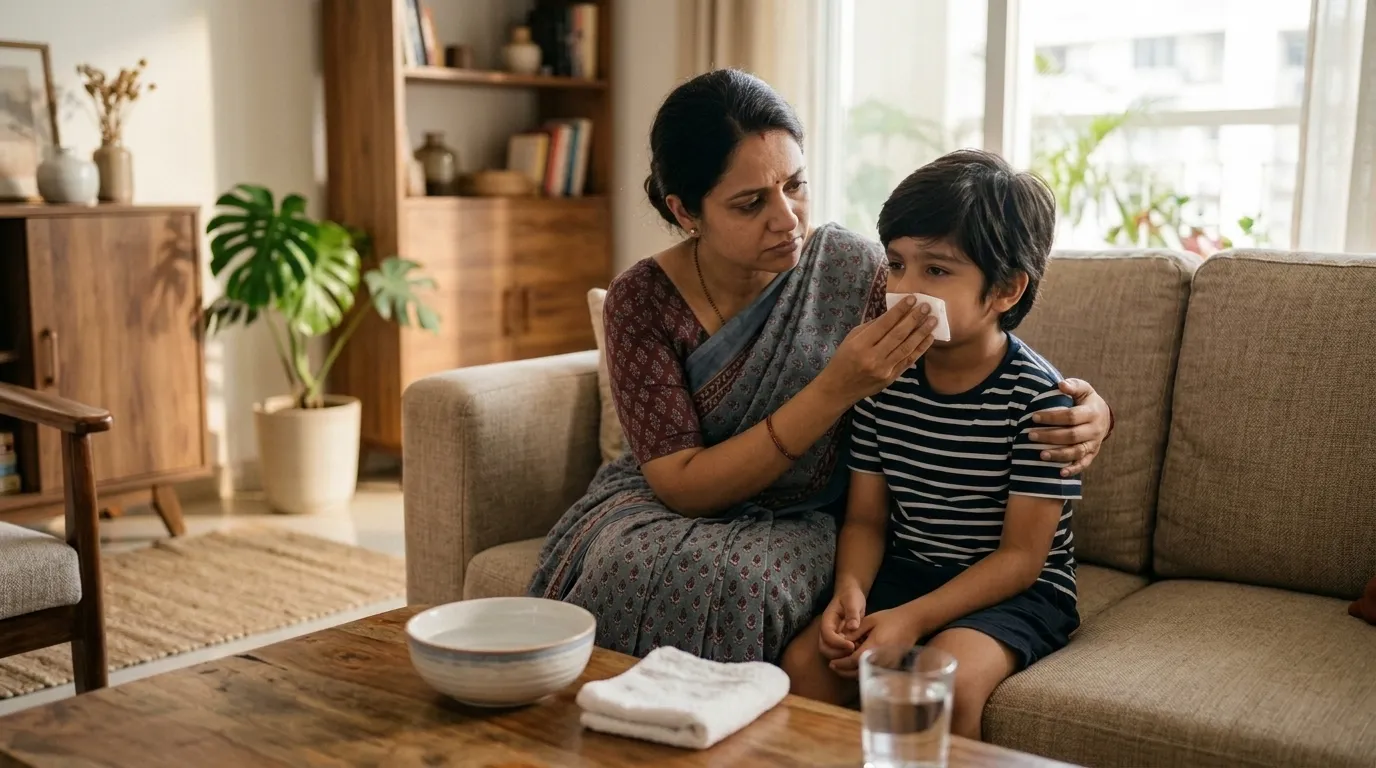
There are few things that cause as much immediate panic in a parent as seeing blood pouring from their child’s nose. It looks alarming, it happens suddenly, and in the moment it’s hard to think clearly about what to actually do.
The good news is that nosebleeds in children are extremely common and, in the vast majority of cases, completely harmless. Most stop on their own within a few minutes. Most have simple, straightforward causes. And most can be managed at home without any medical intervention at all.
But not all of them. Some nosebleeds are more frequent than they should be, some don’t stop when they should, and occasionally there’s something underlying that needs proper attention. Knowing the difference between a nosebleed that just needs a calm parent and a tissue, and one that needs an ENT, is what this is about.
Why Do Children Get Nosebleeds?
The inside of the nose has a rich network of tiny blood vessels sitting very close to the surface of the nasal lining, particularly in an area at the front of the septum called Little’s area. In children, this lining is thin, delicate, and easily disturbed. That’s why nosebleeds are so much more common in kids than in adults.
The most frequent triggers:
Nose picking – by far the most common cause in children, though rarely admitted to. Small fingers and sharp fingernails are surprisingly effective at disturbing those fragile surface vessels.
Dry air – particularly during hot summers or in air-conditioned rooms. Dry air dries out the nasal lining, making it more fragile and prone to cracking and bleeding.
Colds and upper respiratory infections – frequent blowing, inflammation of the nasal lining, and increased blood flow to the nose all make bleeding more likely during a cold.
Allergic rhinitis – chronic nasal inflammation from allergies keeps the lining irritated and fragile, contributing to repeated nosebleeds.
Trauma – a knock to the nose during play, a fall, or simply rubbing the nose vigorously.
Foreign body – young children occasionally insert small objects into the nose. A persistent one-sided nosebleed with an unusual smell should raise this possibility.
Low humidity environments – classrooms, cars, and bedrooms with poor humidity levels contribute to nasal dryness year-round.
Most nosebleeds in children come from the front of the nose – anterior nosebleeds, and these are the ones that are visible, manageable at home, and almost always benign.
What to Do When It Happens The Right First Aid
This is where a lot of parents go wrong, because the instinctive response is often the opposite of what actually helps.
Sit the child upright and lean slightly forward – not backward. Tilting the head back causes blood to flow down the throat, which can cause nausea, vomiting, or choking. Forward is always the right position.
Pinch the soft part of the nose – the fleshy part below the bony bridge. This is where the bleeding vessels are. Pinching the bony upper part of the nose does nothing useful.
Hold it firmly for ten minutes – without releasing to check. This is the part children find hardest, but releasing the pressure every two minutes means the clot never has a chance to form. Set a timer and hold it calmly for the full ten minutes.
Breathe through the mouth – the child should breathe calmly through their mouth while the nose is pinched.
Stay calm – children take their cues from the adults around them. A panicked parent makes a panicked child, which increases heart rate and blood pressure and makes the bleeding harder to control. Calm, matter-of-fact reassurance goes a long way.
Once it stops – keep the child quiet for a while. No blowing the nose, no picking, no vigorous activity for at least a few hours. These can dislodge the clot and restart the bleeding.
What not to do:
- Don’t tilt the head back
- Don’t pack the nose with cotton wool or tissue and leave it in, this can disturb the clot when removed
- Don’t tell the child to blow their nose during or immediately after
- Don’t put ice directly on the nose bridge, it rarely helps and is uncomfortable for children
Home Remedies That Actually Help
Beyond the immediate first aid, a few things help reduce the frequency of nosebleeds in children prone to them:
Saline nasal spray or drops – keeping the nasal lining moisturised is one of the most effective ways to reduce recurrent nosebleeds from dryness. A simple saline spray used once or twice daily, particularly during dry weather or air-conditioned environments – makes a meaningful difference.
Petroleum jelly (Vaseline) inside the nostrils – a small amount applied just inside the nostril with a cotton bud at bedtime helps keep the lining from drying out overnight. This is a commonly recommended measure for children with recurrent dry-air nosebleeds.
Humidifier in the bedroom – adding moisture to the air, particularly while sleeping, reduces nasal dryness significantly.
Keeping nails trimmed – for younger children especially, short, smooth nails mean less damage if they do pick their nose.
Managing allergies – if allergic rhinitis is contributing, treating the allergy properly reduces nasal inflammation and the associated bleeding risk.
These measures won’t stop every nosebleed, but for children who get them regularly from dryness or minor irritation, they reduce frequency noticeably.
When Should a Parent Be Concerned?
Most nosebleeds in children need nothing more than calm first aid and a few preventive measures. But certain patterns and accompanying features change the picture.
It doesn’t stop after 20 to 30 minutes of proper pressure – if the bleeding continues despite correct technique for this length of time, the child needs to be seen. This isn’t the moment to try a different home remedy.
The bleeding is heavy – most anterior nosebleeds produce a manageable flow that responds to pressure. Heavy, rapid bleeding that soaks through multiple cloths or towels quickly is a different situation.
The nosebleed followed a significant head or face injury – trauma-related nosebleeds need assessment to rule out a fracture or more significant injury.
Blood is coming from both nostrils simultaneously, or from the back of the throat – posterior nosebleeds from deeper in the nasal cavity are less common in children but more difficult to control and need medical management.
The child is swallowing a lot of blood – this suggests bleeding is going backward down the throat rather than out the front, which means it may be a posterior bleed.
Nosebleeds are happening very frequently – a nosebleed once in a while is normal. Multiple times a week consistently, or several times in a single day, is not. Frequent recurrence needs investigation to understand why.
The child bruises easily or bleeds longer than expected from cuts – when nosebleeds are part of a broader pattern of easy bruising, prolonged bleeding from minor cuts, or unusual bleeding elsewhere, it raises the possibility of a bleeding disorder. This needs blood tests and proper investigation.
There are other unexplained symptoms – fatigue, pallor, or other signs alongside frequent nosebleeds need to be taken seriously and assessed.
Suspected foreign body – one-sided nosebleeds in a young child, particularly with an unusual smell or discharge, need ENT assessment to check for a foreign object.
What Does an ENT Do?
When a child is referred to an ENT for recurrent or significant nosebleeds, the assessment starts with a proper look inside the nose, something that tells the clinician far more than examining the outside.
Nasal endoscopy or anterior rhinoscopy – allows the ENT to identify where the bleeding is coming from, what the nasal lining looks like, and whether there are any structural issues, polyps, or foreign objects contributing.
Cauterisation – if a specific bleeding vessel is identified particularly in Little’s area , cauterisation can seal it. This is a minor procedure done under local anaesthetic (or general anaesthetic in very young children). A chemical agent or a small electrical probe is applied to the vessel to seal it and prevent further bleeding from that point. It’s quick, effective for the right cases, and recovery is straightforward.
Blood tests – if a bleeding disorder is suspected based on the history, clotting studies, platelet count, and other tests are arranged.
Allergy assessment – if allergic rhinitis appears to be driving the problem, the ENT may arrange allergy testing or recommend appropriate management.
Addressing structural issues – a deviated septum or other structural abnormality contributing to recurrent bleeding may be assessed for longer-term management.
When Should You Take the Child to ENT Rather Than Just the GP?
A GP is a perfectly reasonable first stop for recurrent nosebleeds, and they’ll refer on if needed. But go directly to ENT if:
- A nosebleed hasn’t stopped after 20 to 30 minutes of correct first aid
- There’s heavy or rapid bleeding
- The nosebleed followed a significant injury
- You suspect a foreign body in the nose
- The child has had more than one nosebleed a week consistently for several weeks
- There are signs of a possible bleeding disorder, easy bruising, prolonged bleeding elsewhere
Final Thoughts
Nosebleeds in children are almost always more frightening than they are serious. The vast majority stop quickly with the right first aid, have simple causes, and don’t signal anything worth worrying about beyond making sure the nasal lining stays moisturised and little fingers stay out of little noses.
When they’re frequent, heavy, or not stopping as they should, that’s when it’s worth getting a proper look. And in those cases, the investigation and treatment options are straightforward and very effective.
Our ENT specialist is experienced in assessing and managing nosebleeds in children, from identifying the cause of recurrent episodes to carrying out cauterisation when it’s the right solution. If your child has been having nosebleeds more often than feels normal, come in for an assessment. It’s usually a very reassuring conversation.