
Piles (Haemorrhoids): Stages, Symptoms & When You Finally Need Surgery
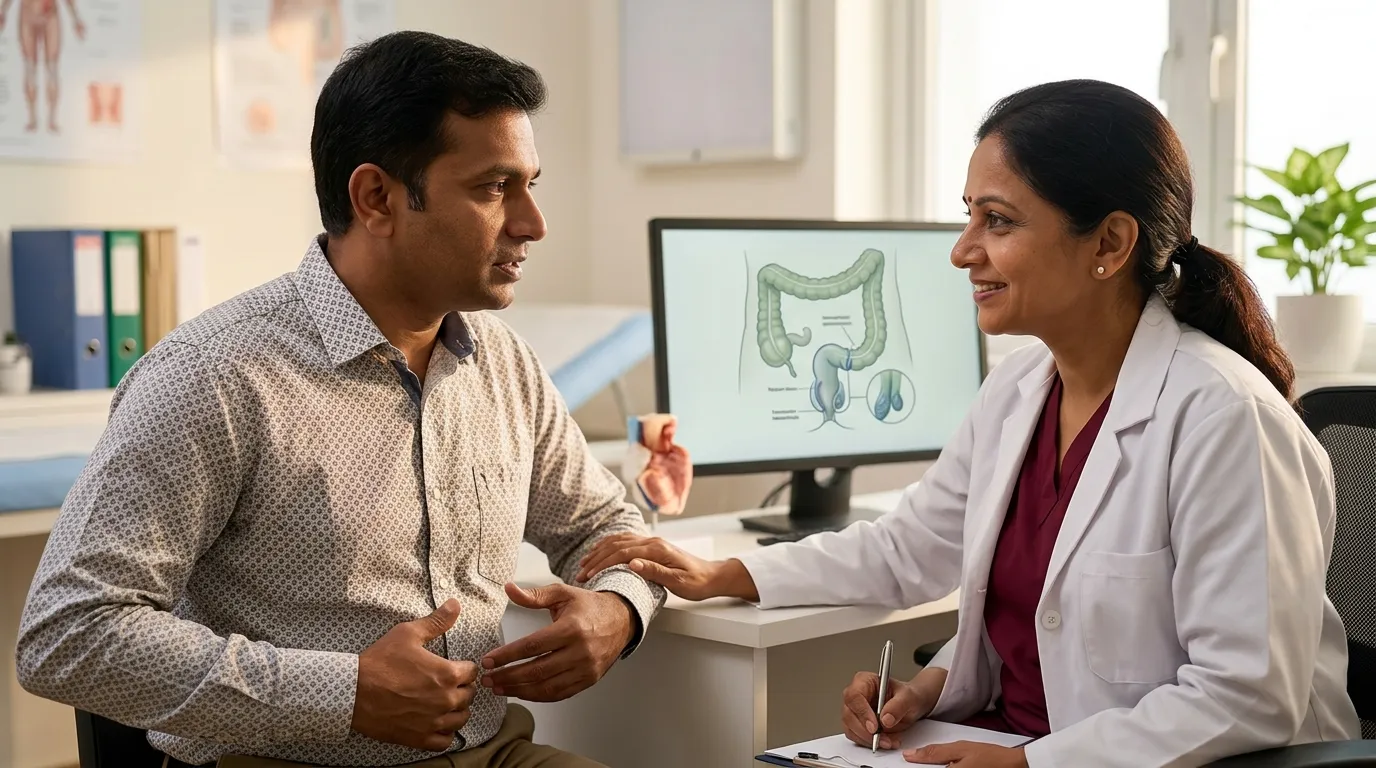
This is one of those conditions people deal with in silence for a long time. There’s a certain awkwardness around it, it’s not exactly dinner table conversation. So instead of getting it checked, most people quietly manage the discomfort, hope it goes away on its own, and only seek help when things get bad enough that they can’t ignore it anymore.
The problem with that approach is that piles, left unaddressed, tend to progress. What starts as a mild inconvenience can gradually become something that affects daily life in a very real way.
If you’ve been putting off dealing with this, here’s a straightforward look at what piles actually are, how they’re classified, and when the situation calls for more than home remedies.
What Are Piles?
Piles, or haemorrhoids, are swollen veins in and around the rectum and anus. They develop when the tissue and blood vessels in that area come under repeated or prolonged pressure and the blood vessels, unable to handle it indefinitely, begin to swell and enlarge.
They’re more common than most people realise. In fact, a significant portion of adults will experience haemorrhoids at some point in their lives, though many cases resolve without any formal treatment.
There are two types based on location:
Internal haemorrhoids develop inside the rectum. They’re not visible and usually painless, but they can bleed – which is often how they’re first noticed.
External haemorrhoids form under the skin around the anus. These are the ones more likely to cause pain, itching, and discomfort, particularly during and after bowel movements.
Some people have both at the same time.
What Causes Them?
Haemorrhoids develop when pressure in the lower rectum increases consistently over time. The usual contributors:
- Chronic constipation or straining during bowel movements – this is the most common driver
- Prolonged sitting – especially on the toilet for extended periods
- Low-fibre diet – makes stools harder and bowel movements more difficult
- Pregnancy – increased pressure on the pelvic veins, particularly in the later stages
- Heavy lifting – repeated strain increases intra-abdominal pressure
- Ageing – the supporting tissue in the rectal area weakens over time
- Chronic diarrhoea – repeated irritation of the anal area
Often it’s not one single cause but a pattern of habits that builds up over time.
Symptoms to Watch For
The symptoms vary depending on the type and severity, but common ones include:
- Bright red blood during or after a bowel movement – on the toilet paper or in the bowl
- Itching or irritation around the anal area
- Pain or discomfort, particularly during bowel movements
- A feeling of incomplete evacuation after passing stool
- Swelling or a lump around the anus
- Mucus discharge after a bowel movement
- A sensation of something protruding from the anus
Bleeding is usually the first thing that prompts people to seek help. It’s worth noting – rectal bleeding should always be assessed properly. Haemorrhoids are the most common cause, but other conditions can also cause bleeding, and they need to be ruled out.
The Four Stages of Internal Haemorrhoids
Internal haemorrhoids are classified into four grades, and the grade largely determines what treatment is appropriate.
Grade I – The haemorrhoid is present inside the rectum but doesn’t protrude. There may be bleeding but no prolapse. At this stage, dietary and lifestyle changes are usually enough.
Grade II – The haemorrhoid prolapses comes out of the anus during a bowel movement but goes back inside on its own afterward. Bleeding and discomfort are common. Conservative treatment and minor procedures are typically used here.
Grade III – The haemorrhoid prolapses during a bowel movement and needs to be pushed back in manually. It doesn’t return on its own. Symptoms at this stage are usually more persistent and disruptive.
Grade IV – The haemorrhoid stays prolapsed outside the anus and cannot be pushed back in. This grade is associated with more significant symptoms and is unlikely to respond to non-surgical approaches.
External haemorrhoids don’t follow this grading system but can become particularly painful when a blood clot forms inside them, a condition called a thrombosed haemorrhoid. This causes sudden, severe pain and a firm, tender lump near the anus.
Non-Surgical Treatment Options
For Grade I and Grade II haemorrhoids, and many Grade III cases, surgery isn’t the first line of treatment.
Dietary and lifestyle changes form the foundation increasing fibre intake, drinking more water, avoiding prolonged sitting on the toilet, and not straining. These changes reduce the pressure that caused the problem in the first place and can significantly improve symptoms.
Topical treatments – creams and suppositories available from a pharmacy, help with itching, swelling, and discomfort. They manage symptoms but don’t treat the underlying haemorrhoid.
Rubber band ligation – a common in-clinic procedure where a small rubber band is placed around the base of the haemorrhoid, cutting off its blood supply. The haemorrhoid shrinks and falls off within a week or so. It’s effective for Grade I and II haemorrhoids and some Grade III cases.
Sclerotherapy – a solution is injected into the haemorrhoid to shrink it. Used for smaller internal haemorrhoids.
Infrared coagulation – heat is applied to shrink the haemorrhoid tissue. Another option for lower-grade cases.
These procedures are generally done as outpatient treatments, no hospital admission needed.
When Does Surgery Become Necessary?
This is the question most patients eventually reach. Surgery is typically recommended when:
- Haemorrhoids are Grade III or IV and not responding to non-surgical treatment
- Symptoms bleeding, prolapse, pain are significantly affecting daily life
- There’s a thrombosed external haemorrhoid causing severe pain that hasn’t resolved
- Repeated non-surgical procedures haven’t provided lasting relief
- Both internal and external haemorrhoids are present and causing ongoing problems
The main surgical procedure is a haemorrhoidectomy surgical removal of the haemorrhoid tissue. It’s highly effective and provides lasting results, particularly for advanced-grade haemorrhoids. Recovery takes a couple of weeks and involves some post-operative discomfort, but for patients who’ve been dealing with Grade III or IV symptoms, the relief afterward is significant.
A newer technique called stapled haemorrhoidopexy repositions prolapsed haemorrhoid tissue rather than removing it entirely. It’s associated with less post-operative pain and a faster recovery, though it’s not suitable for every case.
LASER haemorrhoid surgery is another option gaining traction, it’s less invasive, causes minimal bleeding, and recovery tends to be quicker. Whether it’s the right approach depends on the individual case.
What Happens If You Keep Ignoring It?
Grade I haemorrhoids can sometimes resolve with lifestyle changes alone. But Grade II, III, and IV haemorrhoids rarely go away without some form of treatment. Left alone, they tend to worsen, prolapse becomes more frequent, bleeding becomes heavier, and daily activities become increasingly uncomfortable.
Anaemia from chronic blood loss, though rare, is a real possibility when bleeding haemorrhoids go untreated for a long time. And the longer surgery is delayed for advanced cases, the more involved the procedure tends to be.
Final Thoughts
Piles are common, manageable, and nothing to be embarrassed about bringing up with a doctor. The staging system exists precisely to guide treatment, not every case needs surgery, and the right approach depends entirely on how far things have progressed.
If symptoms have been going on for a while, if bleeding keeps happening, or if daily life is being affected that’s the signal to stop managing it quietly and get a proper assessment.
Our surgical team regularly evaluates and treats haemorrhoids across all grades from conservative management for early-stage cases to surgical options for more advanced ones. If this has been something you’ve been putting off, come in for a consultation. It’s a far more straightforward conversation than most people expect.